PM Certifications in the AI Era: Which Ones Still Matter- and What's New
As AI reshapes forecasting, governance, and portfolio leadership, the value of traditional project management credentials is being re-evaluated. This article offers a clear-eyed assessment of which certifications remain strategically aligned, which are shifting, and how senior and emerging leaders should respond.
Iyanna Trimmingham
2/23/20264 min read
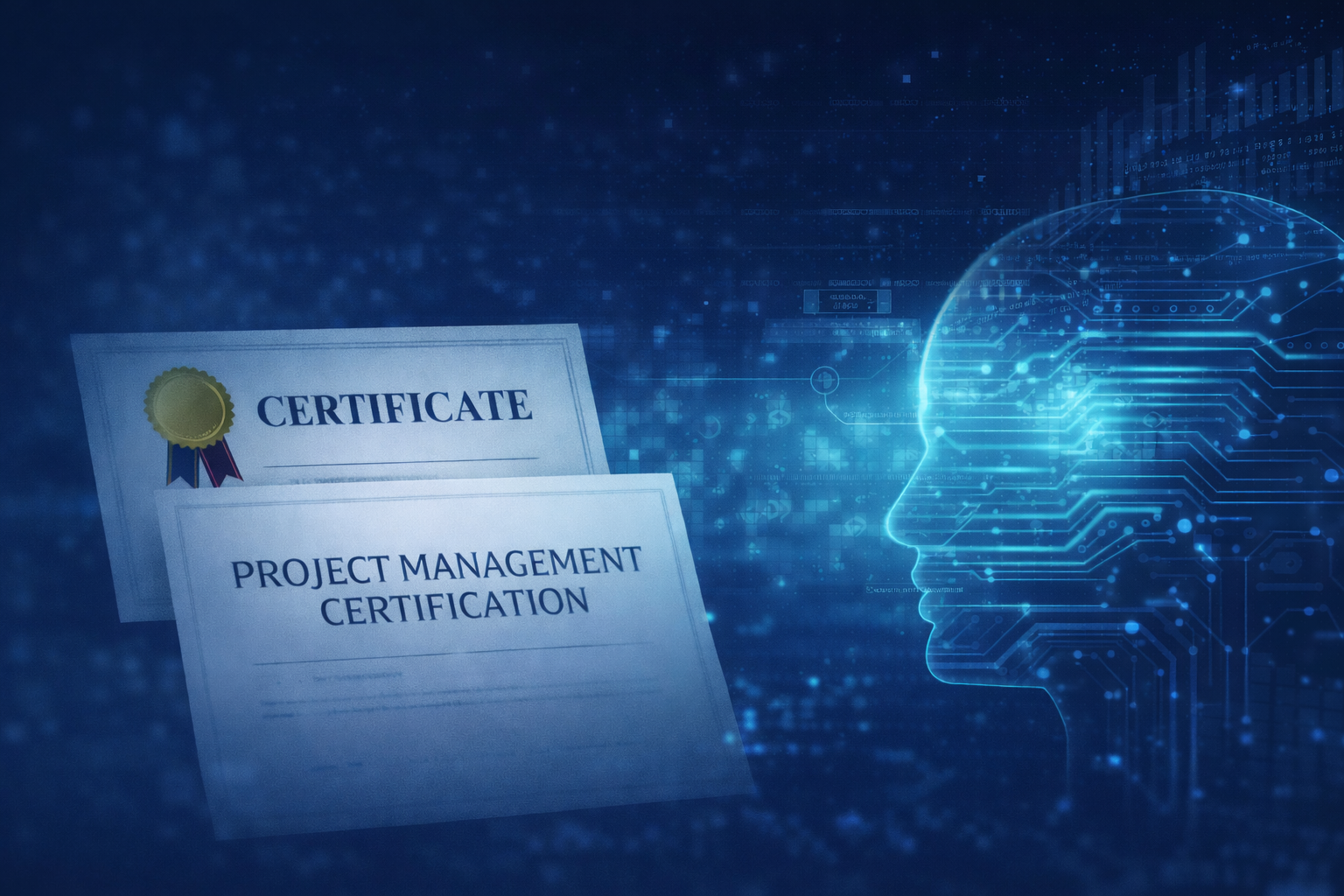
Let’s be honest: the project management certification landscape has always been overwhelming. PMP, CAPM, PRINCE2, CSM, PMI-AC, the list goes on. Now, with AI reshaping how project managers plan, forecast, and lead, the question is louder than ever: Which certifications still hold real value? Which ones need to evolve? And which new AI-focused credentials are worth your time and money?
This guide cuts through the noise. Whether you’re breaking into project management, strengthening your mid-career position, or advising a team, here’s what truly matters in 2026
The PMP Is Evolving, and That's a Very Good Thing
The Project Management Professional (PMP) certification from the Project Management Institute (PMI) remains the industry benchmark, and it’s not standing still. A new PMP exam launches in July 2026, and the updates are a direct response to how project leadership is changing.
For years, the PMP validated structured delivery across scope, schedule, and cost. That foundation still matters. But the role of a PM now extends beyond execution mechanics. AI-assisted forecasting, hybrid methodologies, and value-based performance measurement are becoming standard expectations.
The 2026 update reflects that shift.
AI integration is now embedded into exam content, including how PMs incorporate AI tools responsibly into workflows and decision-making. There is greater emphasis on value delivery over traditional output metrics. Agile and hybrid approaches are prioritized over purely predictive models. Sustainability and stakeholder alignment are treated as core competencies rather than add-ons.
This isn’t a cosmetic refresh. It signals that the profession recognizes what many experienced PMs already know: managing tasks is not the same as leading outcomes.
Bottom line: The PMP remains relevant, but its value is strongest when aligned with how delivery leadership is actually evolving.
The New Kid on the Block: PMI-CPMAI
If the PMP reflects how general project leadership is evolving, the PMI-CPMAI represents a more specialized shift. PMI’s Certified Professional in Managing AI (PMI-CPMAI) focuses specifically on leading AI and machine learning initiatives, projects where uncertainty, data quality, and iterative model validation replace traditional linear execution patterns.
PMI’s acquisition of Cognilytica in 2024 brought the CPMAI framework into the mainstream PMI ecosystem. That move alone signals something important: AI project governance is no longer niche. It’s becoming part of professional standards. The CPMAI covers the full lifecycle of AI initiatives, from business understanding and data preparation to model deployment and operational monitoring. It is particularly valuable for PMs who serve as the bridge between technical AI teams and business stakeholders, a role that is increasingly common and increasingly misunderstood. If your organization is piloting AI initiatives, this credential doesn’t just add a line to your resume. It signals that you understand how AI projects differ structurally from traditional delivery models.
Certifications That Still Hold Solid Value
Not all certifications are adapting at the same pace. Some credentials are thoughtfully evolving to reflect hybrid delivery, AI integration, and outcome-based measurement. Others remain anchored in models that assume predictability, linear planning, and static team structures.
In practice, many organizations now operate in environments where priorities shift mid-quarter, portfolios rebalance under resource constraints, and data-driven decision-making is expected in real time. Certifications that ignore those realities may still carry brand recognition, but their practical value is increasingly situational.
Before investing, ask yourself: Does this credential reflect how projects are run in my environment?
The Smart Certification Strategy for 2026
If you're building out (or rebuilding) your certification portfolio, here's a practical roadmap:
For Early-Career PMs: Start with the CAPM to establish your foundation, then map a clear path to the PMP. While waiting to accumulate the experience hours required for the PMP, consider using the time to earn the PMI-CPMAI, it builds AI fluency that will differentiate you significantly.
For Mid-Career PMs: If you already hold the PMP, your priority should be renewal PDUs that keep your skills current; prioritize education PDUs in AI, agile leadership, and data-driven decision-making. Strongly consider adding the PMI-CPMAI as a companion credential. If your work is heavily agile, the PMI-ACP rounds out the package nicely.
For Senior PMs and PMO Leaders: At the senior level, credentials matter less than demonstrated outcomes, but they still influence executive perception and hiring decisions. In competitive environments, they signal market awareness and continued professional relevance.
The 2026 PMP refresh and the PMI-CPMAI are currently the most strategically aligned credentials for leaders overseeing technology-enabled portfolios. They reflect where delivery leadership is heading. But no certification replaces the ability to design governance structures, set decision thresholds, prioritize competing initiatives, and align portfolios to measurable business outcomes. At this level, credentials should reinforce credibility. Strategic judgment remains the differentiator.
Regardless of your career stage, one rule applies across the board: PDUs that cover AI, sustainability, and outcomes-focused leadership are no longer optional add-ons. They're now the mainstream.
Final Thoughts: Credentials Are a Signal, not a Destination
Certifications matter, but they matter most when they reflect genuinely current knowledge and real-world skills. As AI increasingly automates scheduling, forecasting, and reporting, the differentiator for project leaders is no longer task management, it’s judgment. Organizations need professionals who can interpret data, navigate ambiguity, align stakeholders, and deploy AI tools responsibly. Certifications validate frameworks. They do not replace critical thinking or leadership under pressure.
The strongest certification strategy in 2026 isn’t about collecting letters after your name. It’s about aligning your credentials with how delivery leadership is evolving and backing them with real-world fluency. The PMs who thrive in the next decade will be the ones who understand both the human and the machine sides of delivery. That combination is rare, valuable, and now certifiable.