Busy Is Not Productive: Why Projects Feel Stuck
Your team is busy, but deadlines keep slipping. Learn a practical execution control rhythm that turns activity into measurable project progress.
Iyanna Trimmingham
2/16/20263 min read
You and your team are working nonstop. Meetings are happening. Tasks are moving. Messages are flying.
Yet deadlines keep slipping. Deliverables feel half-finished. And nothing feels complete.
This is not a time management issue. It is an execution control issue.
What This Means
Being busy measures activity.
Being productive measures value delivered.
Early-career PMs and small business operators often operate in constant motion. They respond to requests, attend meetings, answer emails, and check off tasks. But there is no mechanism ensuring weekly effort converts into finished outcomes. When that mechanism is missing, projects feel stuck even when everyone is exhausted.
Execution fails when structure is absent, not when effort is lacking.
Why It Matters
Deadlines slip quietly rather than dramatically
Team morale drops because effort does not feel meaningful
Clients lose confidence due to partial delivery
Founders and PMs absorb more work to compensate
Rework increases because completion criteria are unclear
Burnout rises without measurable progress
If you do not control execution at the weekly level, your project controls you.
How To Apply It
Below is a simple Weekly Outcome Control Loop designed for small teams and early-career PMs.
Step 1: Define One Weekly Outcome Per Workstream
Not a task list. Not activity. One defined outcome per major stream of work.
Instead of: “Work on website updates.”
Define: “Homepage redesign approved and finalized.”
Completion must be binary. Done or not done.
Step 2: Translate Outcomes Into Proof
Ask: What artifact proves this is complete?
Examples:
Signed approval
Published page
Sent client report
Finalized budget file
If there is no proof, it is not finished.
Step 3: Assign One Owner Per Outcome
Not shared ownership. Not collaborative ownership. One person is accountable for ensuring completion. Collaboration still happens. Accountability is singular.
Step 4: Limit Active Outcomes
If your team has five people, you should not have 25 major weekly outcomes.
Execution capacity is finite.
Focus forces completion.
Overactivation creates stall.
Step 5: Run a 30-Minute Weekly Execution Review
Agenda:
What was committed last week?
Was it completed? Yes or no.
If no, what blocked it?
What is the committed outcome for next week?
No status theater. No storytelling before the binary answer.
Step 6: Separate Planning From Execution
Planning meetings generate ideas.
Execution meetings confirm delivery.
When you mix them, expansion replaces closure.
Step 7: Use the Green/Red Rule
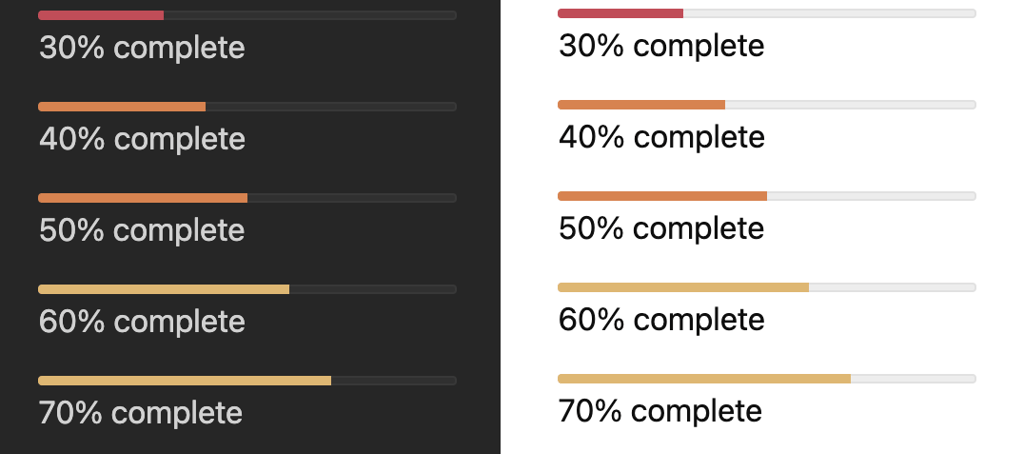
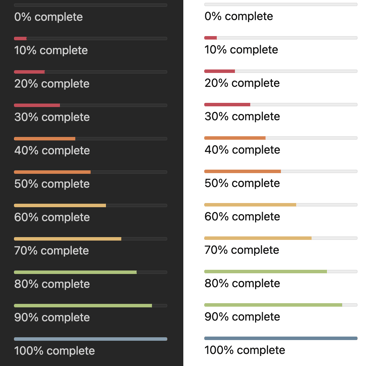
If the committed outcome is not 100 percent complete, it is Red.
There is no Yellow in execution control. Yellow is usually a story in disguise. Momentum increases when completion is measured in clear yes or no terms.
Step 8: Close Before You Start New Work
Before launching new initiatives, confirm that previous commitments are actually closed. Half-finished work drains attention and credibility. Completion creates momentum.
Example Scenario
Before
A small marketing agency manages:
• Ongoing client campaigns
• A website redesign
• A new service launch
• Internal hiring
Weekly meetings last one hour.
Everyone provides updates.
New ideas are introduced.
Tasks are assigned loosely.
Three weeks later:
• Website still not approved
• Campaign metrics inconsistently tracked
• Hiring job description incomplete
• Founder working nights to catch up
Everyone is busy. Nothing is finished.
After Implementing the Weekly Outcome Control Loop
The PM restructures weekly meetings.
Each workstream defines one outcome.
Client A: Campaign dashboard finalized and sent
Website: Final homepage copy approved
Hiring: Job description posted publicly
Each has:
Defined proof of completion
One accountable owner
Binary status
After four weeks:
Website approved and moved to build phase
Dashboards consistently delivered
Hiring process active
Founder no longer absorbing execution gaps
Work did not increase. Control increased. Momentum followed.
Common Mistakes
Tracking tasks instead of outcomes
Allowing shared accountability
Overloading weekly commitments
Letting meetings drift into brainstorming
Confusing progress updates with delivery
Starting new work before closing old work
Execution discipline feels uncomfortable because it exposes overcommitment. That discomfort is diagnostic.
Practical Template
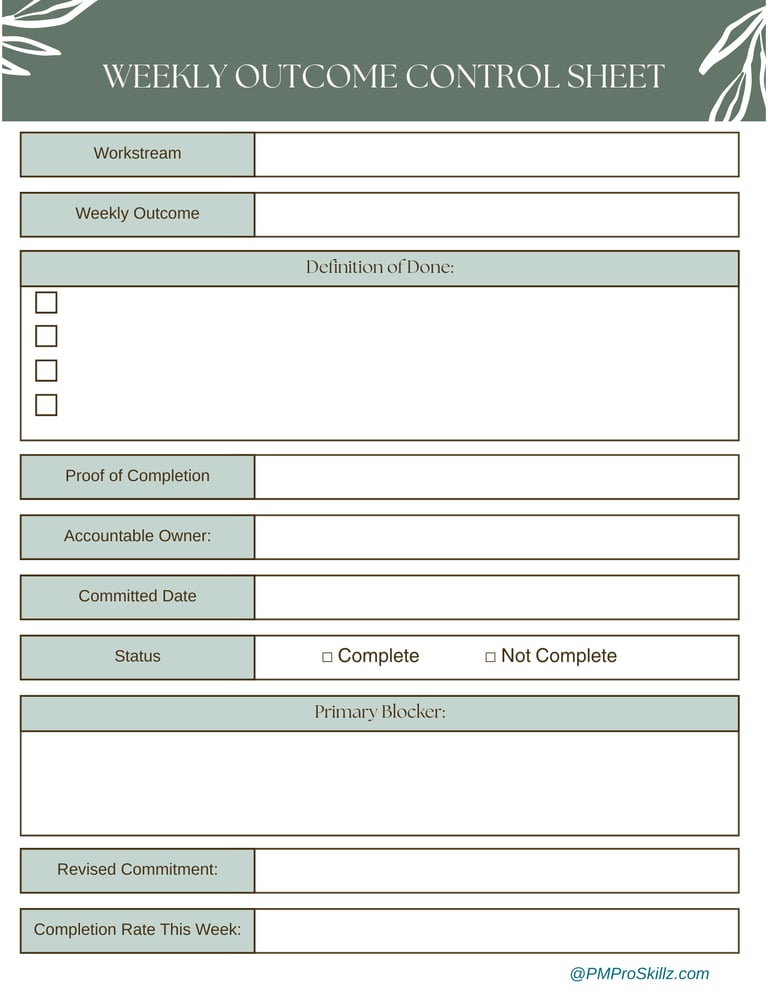
Click image to enlarge. Use this this sheet before your weekly execution review.
Pause & Process Moment
Where are we mistaking motion for progress?
What weekly outcome has been “almost done” for multiple weeks?
Who owns completion versus participation?
What would change if we reduced active outcomes by 30 percent?
Choose one project and implement the Weekly Outcome Control Loop.
Define completion clearly.
Protect ownership.
Measure completion honestly.
Momentum does not follow effort. It follows structure.